Complete Jewish Bible
- 4.8
- Rating
- 10.00K
- Installs
- Free
- Price

 Analysis by App-foxy
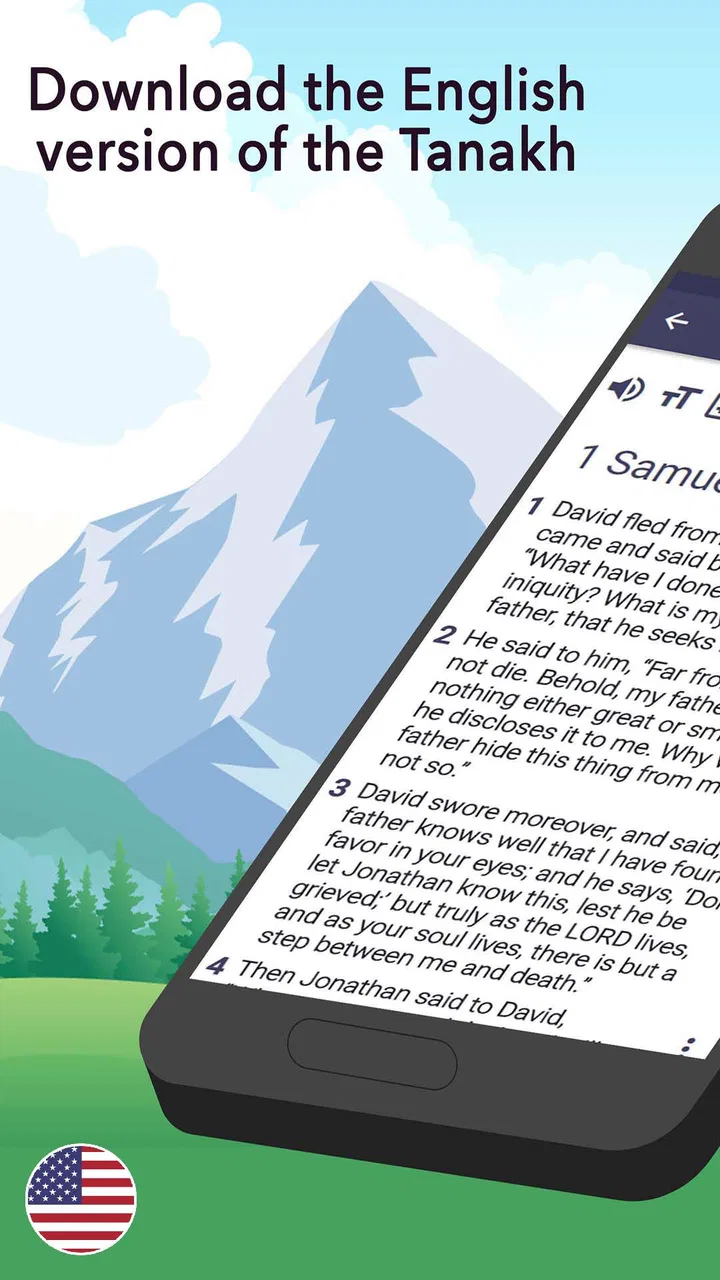
I approached Complete Jewish Bible as a practical reading tool rather than as a flashy study platform, and that distinction matters. Its purpose is straightforward: it puts the English text of the Tanakh into an app that can be kept close at hand, opened without depending on a shelf, and used for quiet reading whenever a few minutes appear. In my experience, its greatest appeal is not a long list of extras but the simplicity of having this particular Bible edition available in a focused mobile format.
The app comes from KJV Bible offline and sits in the Libraries & Demo section. It is free to install, suitable for Everyone, and has earned a 4.8 average from around 449 ratings, with more than 10 thousand installs. Those figures suggest that it has found a small but clearly interested audience. I would not recommend it to someone looking for a broad religious library or an elaborate study suite. I would recommend it to a reader who wants the Complete Jewish Bible in English and values direct access over a crowded interface.
What the reading experience does well
I find the reading experience strongest when I treat the app as a focused place to spend time with the text, rather than expecting it to manage every part of study. That makes it easier to choose a small, repeatable routine and notice whether a phone-based reading copy suits me. From there, the next question is where this focused approach is more useful than broader alternatives.
You May Also Like

 Pandora - Music & Podcasts
Pandora’s Music Is Easy to Start, but Harder to Recover
Pandora’s strength is its low-effort path from a seed to a station. Its weak spot is how much confidence it asks you to place in connection, setup, and quiet recovery.

 8 Ball Pool
 Is Built on Rivalries, Rematches, and Routine
A close look at the rivalries, rematches, shared routines, and unanswered safety questions that turn a quick pool match into a persistent mobile community.

 Samsung Music
’s Quiet Strength Is Playing What You Already Own
Its reach comes less from spectacle than from dependable access to a personal library. That simplicity is both the app’s strongest retention engine and its ceiling.

 AccuWeather: Weather Radar
AccuWeather Review: A Quick, Clear Forecast for Everyday Decisions
For everyday plans, the best forecast is the one you can understand quickly. AccuWeather makes rain timing, radar, and local conditions easy to act on, with a few trade-offs.

 Hill Climb Racing
Why Hill Climb Racing Still Turns Crashes Into One More Run
A tiny car, a bumpy hill and one more upgrade: Hill Climb Racing keeps resurfacing because its simple chaos makes every near-miss feel personal.

 AliExpress - Shopping App
AliExpress Makes Global Shopping Feel Personal, but Shoppers Bear the Risk
AliExpress turns a global marketplace into a pocket-sized discovery engine. Its reach is useful, its shopping loop compelling, and its trade-offs easy to miss.
More From Our News Desk
View All News


A focused way to keep the Tanakh nearby
The first strength is the narrow focus. Many Bible apps try to become complete ecosystems with reading plans, devotionals, audio, social tools, commentary collections, and multiple translations. That can be useful, but it can also make a simple reading session feel like navigation through a catalog. This app is more appealing when the goal is simply to open the text and read the English version of the Tanakh.
I found that focus especially useful for short, unplanned sessions. If I had a few quiet minutes before leaving home, during a break, or at the end of the day, the app made more sense as a dedicated text than a general-purpose religious platform. It encourages a different habit: instead of asking which plan or feature to use, I can concentrate on the passage itself.
The offline emphasis is also important to the app’s identity. A Bible that can be used away from a reliable connection is practical for travel, areas with weak service, or moments when I want to reduce distractions. I would still prepare the app before an important journey rather than assume every device behaves identically, but the offline positioning gives it a clear advantage over a browser-based reading routine.
Useful for steady reading, not just quick searching
A common mistake with mobile Bible apps is treating them only as lookup tools. This one has more value when used for a consistent reading rhythm. I can imagine reading a short section each morning, returning to the same book over several days, or keeping the app open while taking handwritten notes. The small screen is not ideal for deep comparison, but it can support a calm, repeatable routine.
One practical workflow is to choose a single book and read in modest portions instead of jumping around. That reduces the friction caused by mobile navigation and makes it easier to notice continuity, recurring themes, and changes in tone. For someone beginning a personal reading project, the app’s focused nature can be helpful because there are fewer temptations to abandon the text for unrelated material.
Another useful approach is to pair the app with a physical notebook. I would write down the passage reference, a question, and one sentence about what stood out. The app handles access to the text; the notebook handles reflection. This combination is better for me than trying to force every thought into a phone interface, particularly when I want to remember how my understanding developed over time.
Where it fits among Bible alternatives
Compared with a printed Bible, the app is lighter, easier to carry, and available on a device I may already have with me. It is also less satisfying for readers who enjoy turning pages, seeing the physical position of a passage, or writing notes in the margins. A printed edition remains the better choice for long, immersive study away from screens.
Compared with large multi-translation Bible apps, this one is more specialized. Those alternatives are usually stronger when I need to compare wording, consult a wide range of resources, or move between translations. Complete Jewish Bible is the better fit when the desired reading experience is centered on this English Tanakh rather than on a large collection of options.
Compared with reading the text in a mobile browser, a dedicated app should feel more intentional. I do not have to begin with a search engine, and the reading session is less exposed to the interruptions that come with ordinary web browsing. That said, someone who already has a preferred website, browser bookmark, or digital study system may not gain enough from installing another tool.
Small habits that make the app more useful
I would use it in three specific ways. First, I would keep it as my quick-access reading copy for moments when carrying a book is inconvenient. Second, I would use it for repeated reading of one book, returning to the same section across several days rather than treating the text as a collection of isolated quotations. Third, I would use it alongside a separate reference source when I needed historical, linguistic, or interpretive context.
That last point is a meaningful trade-off. The app’s value comes from access to the text, not from replacing every other form of study. If I encounter a difficult passage, I would not expect the app alone to answer questions about translation choices or background. I would note the reference, finish the reading session, and then consult a trusted print or digital resource. Keeping those tasks separate actually makes the reading less cluttered.
For group discussion, I would also prepare references in advance. A phone is convenient during a conversation, but switching between reading and discussion can be awkward. Writing down the passages beforehand helps me stay engaged instead of repeatedly searching while other people are speaking. This is a simple adjustment, but it shows where the app works best: as a dependable text companion, not necessarily as a complete classroom platform.
The main limitation is the narrow scope
The same simplicity that makes the app approachable can make it feel limited. I would miss it if I wanted built-in study depth, extensive cross-referencing, several translations, or a broader library of religious material. Readers who expect a modern Bible app to include a full set of learning tools may find the experience too basic.
There is also a difference between being available offline and being a perfect replacement for a physical study Bible. Offline access helps with availability, but it does not automatically provide the visual context of a printed page, a wide margin, or a comfortable layout for extended annotation. I would choose the app for portability and quick reading, then choose a book or a more comprehensive study application when the session becomes analytical.
The free price makes trying it easy, although the app includes in-app purchases of $0.99 per item. That is worth keeping in mind before assuming every part of the experience is covered by the initial installation. I would check the purchase prompts carefully and decide whether any optional item genuinely supports my reading routine. A free download is attractive, but the best value depends on whether the basic experience already meets my needs.
The current version is Complete Jewish Bible 10.0, and the minimum operating system is Android 7.0. That makes it accessible to many older devices, which is helpful for readers who do not replace their phone frequently. At the same time, anyone using an older handset should set aside a moment to confirm that the app behaves comfortably on that screen and operating system. A readable Bible is only useful if the text is comfortable to view for more than a quick glance.
Who should install it
I see this app working particularly well for readers who already know they want the English Tanakh and do not need a large menu of translations. It also suits people who travel, read in places with inconsistent connectivity, or prefer keeping a dedicated text separate from social and web distractions. Students and discussion-group participants may find it useful as a portable reading copy, provided they bring another resource when interpretation becomes central.
It can also serve someone who is building a reading habit from scratch. The low commitment of a free app removes one barrier, while the focused purpose removes another: there is less pressure to master a complicated feature set. I would suggest starting with a realistic routine, such as a short passage at a consistent time, and using the phone only for reading rather than multitasking.
Readers should probably skip it if they want audio, extensive annotation, advanced search, devotional programs, or a large comparative study environment. I would also steer away from it as a primary tool for serious academic work unless it is paired with authoritative reference materials. The app can provide the text I want to read, but it should not be mistaken for a complete research workstation.
A realistic everyday scenario
Imagine leaving for work with no room for a printed Bible in a small bag. During a quiet lunch, I could open the app, read the next portion of a book, and jot a question in a notebook. On the commute home, if I had no connection, I could return to the same passage and reread it without turning the session into a web search. Later, I could use a separate reference source to investigate the question. That is a believable, useful role for this app: accessible text first, deeper study when needed.
Another scenario is a household where different people have different reading schedules. One person may use a physical edition in the morning, while another reads from the phone at night. The app does not need to replace the book to be valuable. It can simply provide a second, portable way to stay connected with the same reading goal.
A practical way to decide before installing
Before I add another reading app to my phone, I ask what I actually need to do with it. If I want one specific English Tanakh close at hand for regular reading, this focused format makes sense. If my first priority is comparing translations, collecting annotations in one place, or looking up scholarly context while I read, I would start with a broader digital study resource instead and use this app only if a separate, uncluttered reading copy would help.
I would also test the routine, not just the download. Pick a passage you already intended to read, open it in the app during the time and place you expect to use it, and notice whether the phone helps you settle into the text or pulls you toward other tasks. A short trial like that is more revealing than judging an app by its feature list. If the screen feels cramped, a larger device or print edition may suit longer sessions better; if portability wins, the app can fill a useful gap.
Switching from another reading setup
Changing from a printed Bible or a familiar app does not have to mean abandoning what already works. I would keep the existing setup for study sessions and use this one for travel or brief daily reading first. That makes the comparison fair: the question is not whether one format replaces every advantage of another, but whether this app makes a particular reading moment easier.
For readers who already have notes attached to passages elsewhere, I would not move those notes just to create a single system. Keeping references in a notebook or established study tool avoids turning a simple reading app into a migration project. The trade-off is that text and reflections stay in separate places, but that separation can be worthwhile if the app’s main job is quick access rather than long-term research organization.
My final recommendation
After weighing its purpose against its limits, I see Complete Jewish Bible as a sensible specialist app rather than an all-in-one Bible solution. Its strongest quality is the directness of the experience: readers who want the English Tanakh can keep that text available without committing to a larger, more complicated platform. Its offline-oriented use makes it especially practical when connectivity or portability matters.
I would recommend it to anyone who wants a free, focused reading companion and is comfortable supplementing it with other tools for commentary, comparison, or detailed research. I would not recommend it as the only app for someone who expects a complete digital study library. The honest conclusion is simple: choose it for dependable access to the text, not for an oversized collection of extras.
For its intended audience, that restraint is a strength. The app is easy to understand, suitable for Everyone, and supported by a strong average rating from its current user base. I would install it when my priority is to read the Complete Jewish Bible regularly and without unnecessary distraction. If my priority changed to intensive study across many translations and resources, I would move to a broader alternative instead.
FAQs for Complete Jewish Bible
01What is the Complete Jewish Bible app?
The Complete Jewish Bible app is a digital Bible resource designed for readers who want to explore Scripture using a Jewish-oriented translation and presentation. It generally includes the Hebrew Bible and New Testament, often with familiar Jewish names, terminology, and cultural context. Before downloading, check the exact app description to confirm which edition, books, language options, and supplementary materials are included.
02Does the app work offline?
Offline access depends on the specific Complete Jewish Bible app and how its publisher has designed it. Some versions allow users to download or access the biblical text without an internet connection, while others may require connectivity for every chapter, search function, audio feature, or update. Review the app’s permissions and store listing before installation, especially if you plan to read while traveling.
03Is the Complete Jewish Bible translation free to use?
Many Complete Jewish Bible apps can be downloaded at no cost, but availability of the full text, advertisements, premium tools, or optional purchases may vary. Some apps provide free reading with ads, while others may charge for ad removal, audio narration, notes, or additional study content. Confirm the pricing details, in-app purchases, and subscription terms on the relevant Android or iOS store page.
04What reading and study features are included?
Depending on the version, the app may offer chapter navigation, keyword search, bookmarks, highlights, personal notes, adjustable text size, dark mode, daily reading plans, and sharing options. Some editions also include audio playback or parallel translations. Feature availability is not identical across platforms, so compare the Android and iOS descriptions before downloading if a particular study tool is important to you.
05Who would benefit most from using this Bible app?
This app may be especially useful for readers interested in studying the Bible through a Jewish cultural and linguistic perspective, including people exploring Messianic Jewish resources or comparing different English translations. It can also suit users who prefer mobile reading and searchable Scripture. However, readers seeking extensive scholarly commentary, denominational study notes, or a specific canonical arrangement should verify that the app meets those expectations first.
Pros
- Includes the complete Old and New Testaments in one app.
- Uses a Jewish-oriented translation with Hebrew names and terminology.
- Chapter navigation makes it easy to find specific passages.
- Useful for personal study
- devotionals
- and comparative Bible reading.
- Offers a focused reading experience without unrelated entertainment content.
Cons
- The translation style may feel unfamiliar to readers used to mainstream Bibles.
- Some features may require an internet connection or additional downloads.
- Limited study tools may not satisfy users seeking commentaries or cross-references.
- Text formatting and navigation can vary depending on the device screen.
- The app may contain ads or promotional elements during use.

Complete Jewish Bible
Gallery